Personal Injury Law | Tampa, Florida
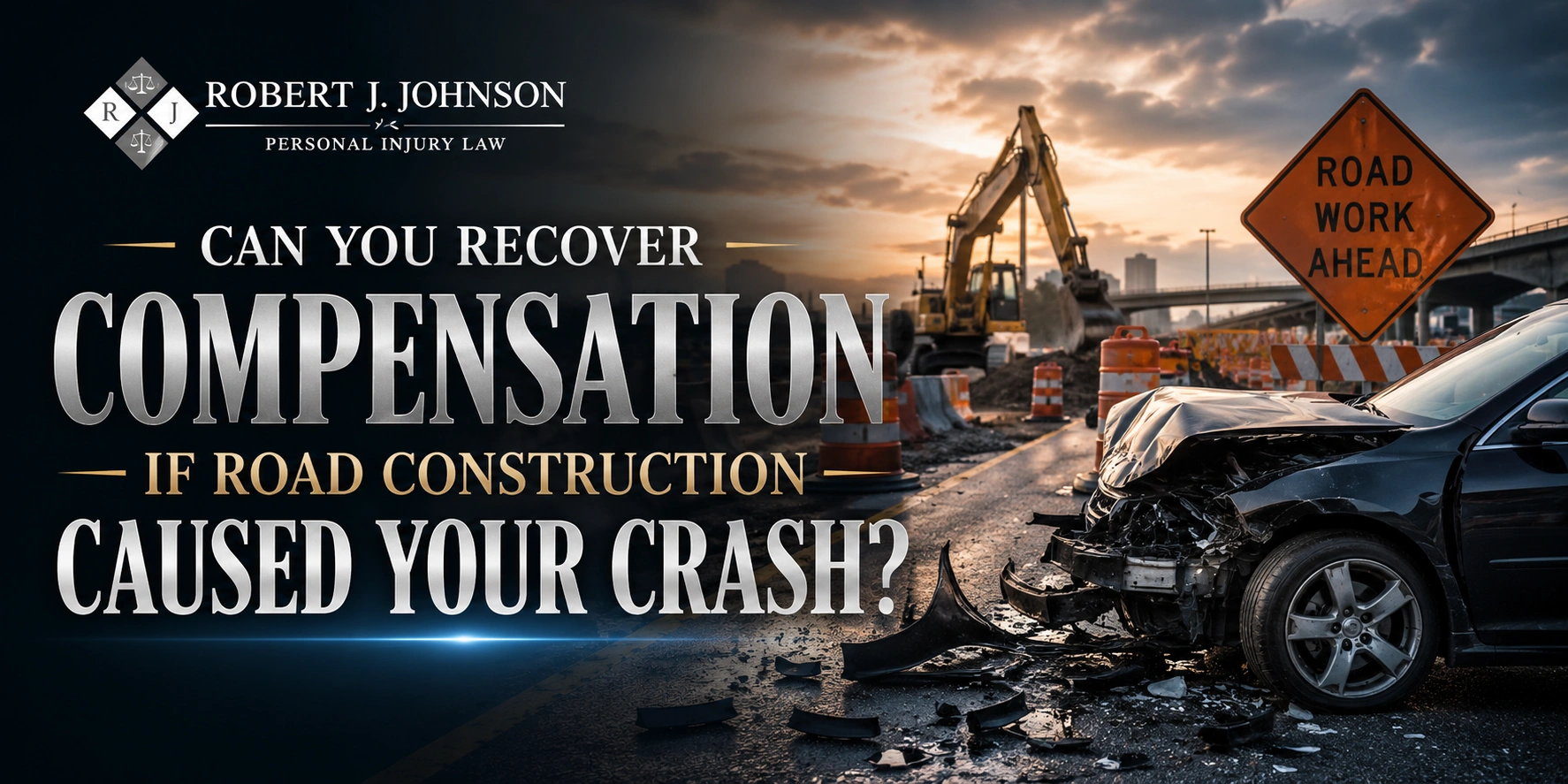
Can You Recover Compensation If Road Construction Caused Your Crash?
Understanding Construction Zone Negligence, Liability Paths, and Evidence Preservation Under Florida Law
Published August 17, 2026 | Updated August 17, 2026 | Robert J. Johnson Law | Florida Personal Injury Claims
Yes, you can get compensation if the crash you were in was caused by road construction. If you want to prevail in court, you’ll have to prove that the party at fault, whether it was a construction company, government entity, or subcontractor, was negligent. Construction zone negligence usually involves a lack of adequate warning signs, poorly placed barriers, insufficient lighting, or the unattended presence of hazardous road conditions.
Key Takeaways
- You can win compensation if you prove fault. You should act fast and document everything.
- You may face short deadlines with government claims.
- You can sue private contractors for unsafe zones.
- You can file claims against cities or states too.
- Government claims enforce strict notice deadlines.
- Photos, dashcams, and witnesses decide case outcomes.
- Comparative fault reduces your payout.
What Counts As A Road Construction Crash For A Claim?
A crash counts if the work zone changed road safety. The danger must be more than “normal traffic.” It must be a hazard from planning or execution.
Common work zone hazards include poor warnings, confusing merges, and unsafe surfaces. Some hazards are temporary. That does not excuse them.
Common Construction Hazards That Support A Claim
You may have a strong case if you faced:
- Missing “Road Work Ahead” signs
- Late merge warnings near lane drops
- Cones placed too close to travel lanes
- Steel plates that shift or lift
- No lighting in night work zones
- Flaggers who misdirect traffic
- Closed exits without detour guidance
Did you feel surprised by the change? That matters. Surprise hazards often show poor planning.
Who Could Be Liable When A Crash Occurs Due To Construction?
Liability falls on several parties. Safety control determines the target. Projects split duties across contracts.
Contractors, Subcontractors May Be Directly Liable
Contractors control signs. Contractors control cones. Contractors control traffic shifts. Contractors control cleanup. Contractors control daily inspections. Negligent contractors face liability.
You may see contractor fault when:
- Signs were not placed per plan.
- Barrels were too sparse.
- Lane tapers were too short.
- Debris stayed on the roadway.
Cities, Counties, And States Can Also Share Liability
Public agencies approve designs and permit closures. They may also inspect work zones. If they ignore dangers, they can share fault.
Government cases can be harder. They also have special rules. Deadlines can be much shorter.
Engineers And Traffic Control Vendors May Be In The Chain
Some projects use separate traffic control firms. Some use engineering consultants. If their plan was unsafe, they can be liable too.
Ask yourself this: Who decided the setup that day? That is often the key.
Injured in a Construction Zone Crash?
Evidence vanishes quickly as work zones change daily. Don't wait until the proof is buried.
What You Need To Prove To Get Compensation
Most claims require four elements. You prove legal duties. You prove rule breaches. You prove direct causation. You prove financial damages. Defendants owed safety. Defendants broke rules. Defendants caused harm. You lost money.
Duty: They Had A Job To Keep The Zone Safe
Work zones must protect drivers and workers. That duty comes from contracts and safety standards. It also comes from common sense.
One recent case illustrates this fact. Negligent parties face significant liability. Broken duties cause major legal problems.
Breach: They Didn’t Meet That Duty
A breach can be a missing sign. It can be a bad taper length. It can be a failure to light a hazard at night.
Causation: The Hazard Led To Your Crash
You must connect the hazard to the crash. Insurers will try to blame speed or distraction. You need evidence to counter that.
Damages: You Suffered Real Losses
Damages can include medical bills and lost income. They also include pain and limits on daily life.
What Safety Standards Often Decide These Cases
Standards matter because they show what “safe” means. They also show what “reasonable” looks like. Violations can support negligence.
MUTCD And Work Zone Plans Often Set The Baseline
Many states follow the MUTCD. It covers sign types, spacing, and warnings.
Projects also have a traffic control plan. That plan can be stricter than general rules. A deviation can be powerful evidence.
Original Reference Data You Can Use When Evaluating Your Case
Below is practical spacing guidance often used by roadway crews. It varies by state and project. It gives you a quick reality check. Treat it as a field screen, not legal proof.
| Work Zone Element | What “Good” Often Looks Like | Red Flag That Helps Your Claim |
|---|---|---|
| Advance Warning Signs | Placed with enough distance to react | Sign appears right at the lane drop |
| Lane Taper | Smooth merge with clear channelization | Sudden cone wall forcing sharp braking |
| Night Lighting | Hazards visible without high beams | Dark edge drop-off or unlit equipment |
| Road Surface Cleanliness | No loose gravel in travel lanes | Gravel or dirt on a curve or ramp |
| Steel Plates | Secured and ramped, no bounce | Plate shifts, rattles, or sits proud |
Did you see any red flags listed above? If yes, document them.
Key Factor Matrix in Work Zone Claims
Crucial evidence types that decide case outcomes:
Visual proof of missing signs, shifted cones, and layout deviations.
Real-time look at driver perspective and sudden reaction hazards.
Unbiased validation of the exact condition during the crash.
“When road construction hazards cause a crash, evidence can disappear as quickly as the work zone changes. We act fast to document missing signage, unsafe tapers, and contractor negligence so victims can secure full compensation.”— Robert J. Johnson, Esq. — Florida Personal Injury Attorney
What Evidence Helps You Win A Construction Zone Claim
You should collect evidence fast. Work zones change daily. Signs move. Crews clean debris. Your best proof can vanish.
Evidence You Can Gather Yourself Right Away
- Photos of signs and cone spacing
- Video of the approach to the hazard
- A wide shot showing missing warnings
- Close shots of debris or drop-offs
- Weather and lighting conditions
- Your injuries and vehicle damage
Also capture location data. Record cross streets and mile markers.
Evidence Your Lawyer Can Request Later
- Traffic control plans and permits
- Daily logs and inspection reports
- Change orders and emails
- Crew schedules and training records
- Prior complaints about that location
- Prior crashes in the same zone
This evidence often shows a pattern. Patterns build leverage.
How Comparative Fault Can Reduce Your Payout
You can still recover money if you share a fault. Many states reduce your payout by your fault share. Some bar recovery past a threshold. Learn more about how comparative fault affects injury compensation in multi-party accidents.
Insurers often claim you drove too fast. They may claim you followed too close. They may claim you ignored signs.
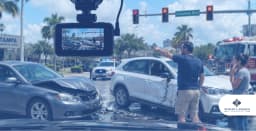
You should address this early. You can do that with photos and witness statements. You can also use crash reconstruction when needed. See how dashcam footage can strengthen your injury claim and help establish key facts.
What Compensation You Can Recover After A Work Zone Crash
You can seek economic and non-economic damages. Some cases may also allow punitive damages. That depends on extreme misconduct.
Typical Damages In These Claims
- ER visits and hospital care
- Surgery, rehab, and future treatment
- Lost wages and lost earning ability
- Vehicle repair or replacement
- Pain, stress, and sleep loss
- Disability and loss of normal life
Do you have future care needs? Get them documented early.
How Government Claims Differ From Contractor Claims
Government claims can have special limits. Notice deadlines can be short. Damage caps may apply in some states.
You must also identify the right agency. That is not always obvious. A state route may run through a city.
If a contractor caused the hazard, you may prefer that claim. Contractors often have larger policies.
First 48 Hours After A Crash: What To Do
Construction zones change quickly. You must expect daily changes. Your job requires immediate action. You preserve case facts.
A Simple 48-Hour Checklist You Can Follow
- Get medical care and follow instructions.
- Return for photos if you could not.
- Request the police report number.
- Save dashcam and phone files.
- Get witness names and numbers.
- Write a short timeline while fresh.
- Avoid recorded insurer statements alone.
Can you revisit the site safely? Bring a passenger to film.
When You Should Talk To A Lawyer For A Work Zone Crash
You should talk to a lawyer early if injuries are serious. You should also call early if a government agency is involved. Early review helps preserve video, logs, and plans.
You may also need help identifying defendants. One wrong target can waste time. Time can kill a claim.
Final Thought
You can recover compensation if construction caused your crash. You must show the zone was unsafe. You must show that failure caused harm. The best cases rely on fast evidence and clear standards.
If road work caused your crash, time is not neutral. The signs move. The cones shift. The proof fades. At ROBERT J. JOHNSON, we help you document clearly, communicate firmly, and protect your claim before it gets buried.
PROTECT YOUR CLAIM BEFORE IT GETS BURIED
Get in touch with ROBERT J. JOHNSON for guidance on your road construction claim.
Frequently Asked Questions (FAQs)
Can I Still Sue If A “Road Work” Sign Was Present?
Yes. A sign does not excuse unsafe setup. If warnings were late or unclear, liability may still exist. You must show the setup did not allow safe reaction time.
What If Another Driver Hit Me In A Construction Zone?
You may have two claims. The driver may be at fault. The work zone may also share fault.
When Do I Need To Make A Claim?
That depends on your state and the defendant. Government claims can require fast notice. Contractor cases usually allow longer. You should confirm deadlines immediately to avoid losing rights.
What If The Hazard Was Gone The Next Day?
That is common. Work zones change quickly. Photos, dashcam, and witnesses become crucial. Police notes can also help. A lawyer can request logs showing the setup that day.
Can Loose Gravel Or Debris Really Support A Claim?
Yes, if it came from the work. Debris in travel lanes can show poor housekeeping. You must connect the debris to the contractor’s operations and show it caused loss of control.
Disclaimer: This blog is for informational purposes only. If you want to know anything in details, please contact ROBERT J. JOHNSON.