February 14, 2026
Who Pays for Your Injuries After a Florida Parking Lot Accident
Parking lot accidents happen in the blink of an eye in the Sunshine State, and they are way more common than folks realize. National estimates from the NHTSA suggest a staggering 1 in 5 accidents happen in parking lots. Because these are "private property," folks treat them like the Wild West, trading phone numbers and hoping for the best.
At the Law Offices of Robert Johnson, we’ve seen these "minor" bumps spiral into lifelong medical debts. The question of "who pays for your parking lot accident" feels bigger. Is it the other driver? Or are you stuck paying out of your own pocket? Before an insurance adjuster serves you a lowball offer that won't even cover your first physical therapy bill, you need to know exactly who is on the hook.
1) Common Myths About Florida Parking Lot Accidents and Private Property
The biggest mistake we see people make is assuming that because an accident happened on private property, the police won't come or that a report doesn't matter. That is just plain wrong. While a cop might not always write a ticket for a stop sign violation on a private lot, they can and should still document the scene. If you don't have a crash report, it becomes your word against theirs. And trust us, once that other driver talks to their insurance company, their story usually changes faster than a Florida afternoon thunderstorm.
There are a few things we hear every single week that we need to clear up right now:
Myth 1: Parking lots are always 50/50 fault. That isn't how the law works. If you were in the "thoroughfare" lane and someone backed out of a spot right into you, that is on them.
Myth 2: You don't need a lawyer for a "low-speed" crash. Even at five miles per hour, the jolt of an impact can cause permanent damage to your spine or neck.
Myth 3: The store is always responsible for its lot. While the store has a duty to keep things safe, you have to prove they were negligent, like failing to fix a broken light or a massive pothole.
Don't let these myths keep you from seeking justice. Knowing what to do after a car accident is the first step toward making sure your bills get paid by the right person.
2) Florida No-Fault Insurance Covers Your Initial Medical Bills
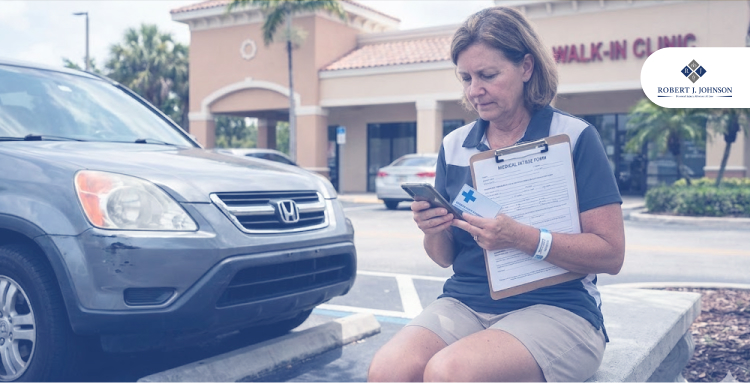
Florida is a "No-Fault" state, which sounds like it should be simple; however, it really isn't. Every driver in our state is required to carry Personal Injury Protection, or PIP. This is the first bucket of money that pays for your injuries, no matter who caused the crash. It is designed to get you $10,000 for medical bills and lost wages quickly, so you aren't waiting on a lawsuit just to see a doctor.
However, If you don't see a doctor within 14 days of your parking lot accident, you can kiss that PIP money goodbye. According to the Florida Department of Highway Safety and Motor Vehicles (FLHSMV), there were over 381,000 traffic crashes in Florida, and many of these involved people who waited too long to get checked out.
We always tell our clients to get checked out immediately. If you wait 15 days, your insurance company will deny your claim faster than you can blink. Also, keep in mind that as we head into 2026, the legislature is making big moves. There is new legislation (SB 522) that is set to transition Florida away from this mandatory PIP system starting July 1, 2026.
This means the way we handle medical bills is about to change drastically. We make sure our clients aren't blindsided by dealing with insurance adjusters. Because they are hoping you don't know your rights under the current statutes before they expire.
3) Who Is Legally Responsible for Your Parking Lot Injuries
Sometimes, the person who pays isn't the person who was behind the wheel. We call this "premises liability." If a parking lot has a massive pothole that has been there for months or a row of hedges that is so overgrown, and the property owner knew about a dangerous condition and didn't fix it, they might be the ones responsible for your injuries.
To help you understand how liability gets split up, we have put together this simple breakdown of common scenarios:
Accident Scenarios and Likely Fault
The driver backs out of a space into you
Likely at fault: The Backing Driver
Critical evidence needed: Witness statements and dashcam footage.
You trip over a crumbling concrete “wheel stop”
Likely at fault: The Property Owner
Critical evidence needed: Photos of the broken concrete and maintenance logs.
A car speeds through a “cut-through” lane
Likely at fault: The Speeding Driver
Critical evidence needed: Surveillance video from the store.
You get hit because of a hidden stop sign
Likely at fault: The Property Owner
Critical evidence needed: Photos of the obstructed or missing signage.
A car hits you while walking in a dark parking lot
Likely at fault: Driver & Property Owner
Critical evidence needed: Light meter readings and police reports.
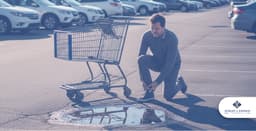
When we investigate these cases, we examine the entire picture. This is why you need to move fast. If you were hurt because of a "slip and fall"-style hazard in a lot, like a leaky irrigation pipe that turned the asphalt into an ice rink, that falls under premises liability cases.
4) How Florida's Modified Comparative Negligence Laws Impact Your Claim
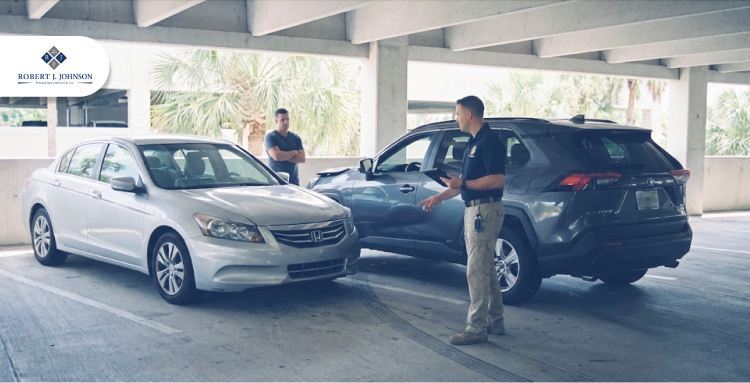
If you were 90% at fault, you could still get 10% of your damages. Now, we live in a "Modified Comparative Negligence" world. This means if you are more than 50% at fault for your own injuries, you get nothing. Zero. Not a dime.
We see insurance companies using this "51% Bar Rule" to scare people into dropping their claims. They might say, "Well, you didn't have your headlights on in the garage, so we aren't paying." That is where we step in.
The NHTSA reports show that fatalities and serious injuries are still a major concern even as vehicle tech improves, often because of human error and distraction. Our job is to fight back and prove that the other party was the primary cause of the accident. We work to keep your "fault percentage" as low as possible.
5) You Must File Your Injury Claim Within the 2-Year Deadline
You now have only two years from the date of the accident to file a lawsuit for a personal injury. If you miss that window by even one day, the court will toss your case out, and you will be stuck with the bills forever.
2 years might sound like a while, but when you are dealing with surgeries, physical therapy, and arguing with insurance companies, that time flies by faster than a tourist on I-4. Evidence disappears. Parking lot owners aren't going to save that grainy CCTV footage. Witnesses move away or forget what they saw.
It is much harder for us to build a winning case than if you call us eighteen hours after the crash.
6) Essential Steps to Take Immediately After a Parking Lot Crash
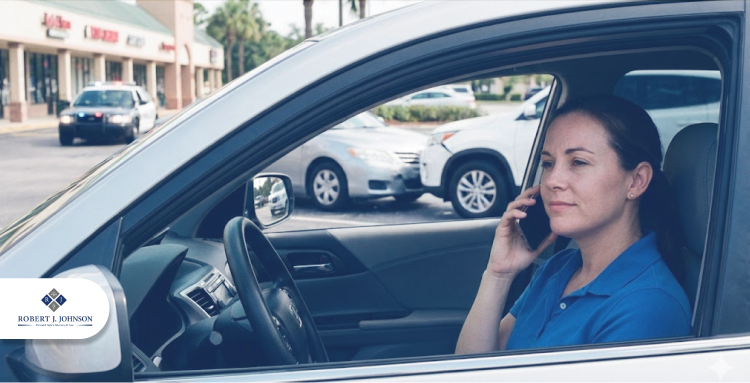
If you are reading this while sitting in your car right after a bump, or if you were just hurt a few days ago, listen close. Stay calm and following a checklist is how you win.
Call the Police: Don't let the other driver talk you out of it. Even if they don't show up to a private lot, you can often file a report online or at the station later. Having a badge number and a formal record is vital.
Take Photos of Everything: Don't just take pictures of the dents. Take pictures of the ground, the signs, the lighting, and the "sight lines." If there was a big truck blocking a stop sign, take a picture of that, too.
Identify Witnesses: Don't just rely on the store employees; they might be worried about their jobs. Look for other shoppers who stopped to help and get their names and phone numbers.
Report it to Management: If you are in a retail lot, go inside and tell the manager. Ask them to make an incident report and give you a copy.
See a Doctor: As we mentioned, you have 14 days for PIP, but sooner is always better. Tell the doctor exactly what hurts, even if it feels minor at the moment.
Our Personal Injury Team Fights for Your Recovery
We know that a parking lot accident is about your life. When you call us, you aren't getting a call center in another state; you are getting a team that knows the streets of Florida and the laws that govern them inside and out.
We work on what is called a contingency fee basis. We have the resources to fight back and the heart to care about the outcome of your story. If you have been hurt in a Florida parking lot, reach out. We are ready to stand in your corner and make sure the right person pays for your injuries.
Disclaimer: This article provides general information and creates no attorney-client relationship. Please contact Robert Johnson directly for professional legal assistance regarding your specific Florida injury claim.