December 23, 2025
Injured in a Hotel or Resort? Understanding Premises Liability for Tourists in Florida
Florida greets visitors with sunshine and palm-lined roads, where resorts and hotels promise a perfect escape from daily life. Every year, millions of tourists arrive to swim, golf, and unwind in a state that depends on hospitality. Yet behind the vacation photos, premises liability for tourists in Florida often becomes an unexpected concern for people who come here seeking rest instead of recovery.
Accidents and injuries at Florida hotels and resorts are more common than most travelers realize. As a prime vacation destination, Florida’s economy depends on the comfort and safety of its guests. That means resort and hotel owners owe the highest duty of care to those who stay on their property. When that duty is breached, the law allows injured visitors to seek accountability under premises liability.
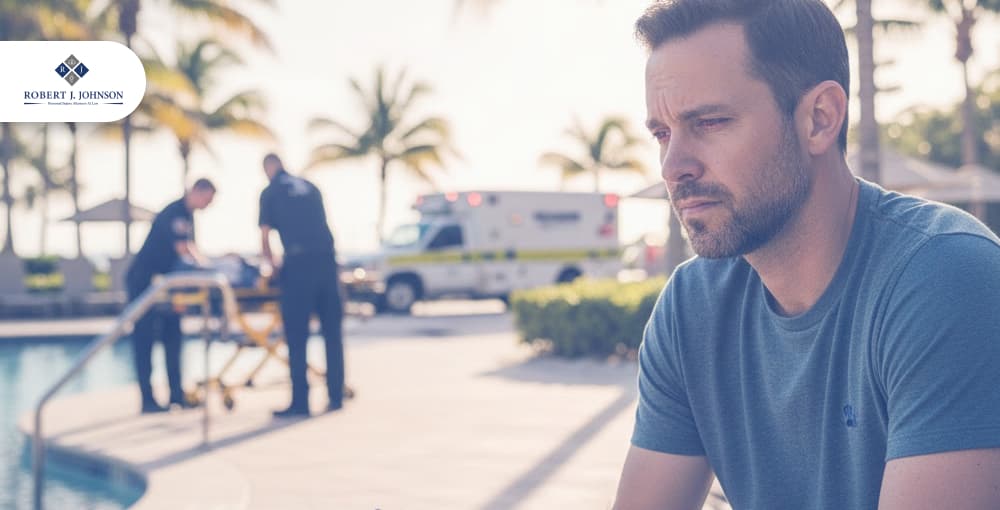
Still, many injured visitors return home with more questions than answers. What happens when a Florida getaway ends with an ambulance instead of a souvenir?
1. What is Premises Liability in Florida?
Premises liability for tourists in Florida is a legal concept built on one simple truth, property owners and operators have a duty of care to keep their premises safe for anyone who enters.
When a guest is injured because a business fails to maintain its property, that failure can become a matter of negligence under Florida law.
For tourists, when they get injured in a hotel or resort, premises liability allows victims to pursue compensation for medical bills, lost time, and suffering that should never have happened in the first place.

Florida law recognizes that tourists and guests are invitees, meaning they are on the property for the benefit of the business. Because of that, property owners and operators owe the highest duty of care to ensure the safety of every visitor.
This duty is not only about simple maintenance; rather, it requires constant attention, from inspecting pool areas to repairing loose tiles before they become dangers.
When a duty of care is breached, even a small act of negligence can lead to a serious injury. The law expects businesses that profit from hospitality to prevent foreseeable harm, especially in settings where distractions and relaxation are part of the experience.
2. Difference Between a Hotel vs. Resort for Premises Liability
There’s a slight distinction between a hotel and a resort for premises liability. At first glance, Florida’s hotels and resorts may seem interchangeable, yet premises liability applies differently depending on the property’s nature.
A hotel primarily provides lodging, often with limited amenities. A resort, on the other hand, operates more like a self-contained village, offering pools, restaurants, golf courses, and recreational activities.
Because of this broader setup, resorts and hotels in Florida must maintain safety not just inside rooms but also across expansive grounds.
A slip on a pool deck, an injury during a guided tour, or an accident at a fitness center all fall within the reach of premises liability. The wider the property’s offerings, the greater the duty to anticipate risks and protect guests.
3. How to Establish Liability in a Resort Accident Claim
When an accident happens at a Florida resort, proving negligence becomes the center of the claim. The law does not automatically assume the property is at fault just because someone was hurt.
The injured person, or their attorney, must show that the resort or hotel failed in its responsibility to maintain a safe environment. That means connecting the hazards or dangers on the property directly to the injuries sustained.
In many premises liability cases, evidence tells the story, photographs of broken steps, missing warning signs, or wet floors without caution cones often become critical in showing how preventable the accident really was.
Establishing negligence is about showing the chain of failures that turned a vacation into a hospital visit. There are four elements of negligence you must prove.
Duty of Care: The resort owed a legal duty to keep its property safe for guests.
Breach: The resort failed to uphold that duty by ignoring unsafe hazards or dangers, such as broken railings or uneven flooring.
Causation: The breach directly caused the accident or injury, not a separate event.
Damages: The guest suffered measurable harm, from medical expenses to lost wages or emotional distress.
For a negligence claim, proving them often requires witness statements, maintenance logs, or surveillance footage that show when a danger first appeared and how long it was left unresolved.
4. Common Resort Hazards Leading to Injury
The most frequent resort accidents and injuries involve conditions that owners should anticipate but too often overlook.
Slippery surfaces near waterfront and beach areas, missing barriers around pools, and unsafe diving zones remain among the top causes of guest harm. Defective elevators, poorly lit corridors, and neglected amenities or activities such as gyms or playgrounds also contribute to resort-related injuries.
5. Identifying All Liable Parties Beyond the Resort Owner

Premises liability for tourists in Florida rarely ends with a single name on the paperwork. While property owners and operators are responsible for keeping guests safe, others may share the blame.
Resorts often work with third-party vendors and outside businesses that manage restaurants, spas, or activities. If their negligence leads to an injury, they can also be held accountable.
What matters most is not just who owns the space, but who had control over it when the injury happened. I’m often asked this question: Can hotel-sponsored activities and excursions be part of liability? Yes, they can.
Resorts often advertise hotel-sponsored activities like boating, scuba diving, or kayaking, usually run by third-party vendors. Guests assume these are covered by the resort’s safety standards, yet that is not always the case.
If a vendor cuts corners or skips safety checks, and the resort failed to supervise or disclose their role, both can share liability. When property owners and operators profit from an excursion, they must also ensure it is safe.
Some of the most serious claims come from inadequate security. Under Florida law, property owners and operators must protect guests and visitors from foreseeable dangers.
When lighting is poor, locks are broken, or guards are untrained, both the resort and its security companies may face negligent security claims.
6. When Can a Florida Resort Avoid Liability
Even with Florida’s strong premises liability laws, there are situations where a resort may not be held responsible for an injury. The law acknowledges that safety is a shared responsibility between the property and its guests.
When a visitor ignores posted warnings, behaves recklessly, or fails to exercise reasonable caution, the scales of justice can tilt in the resort’s favor.
Florida’s comparative negligence law balances fault by measuring each party’s role in an accident, recognizing that guests can share responsibility for their injuries.
Florida’s modified comparative negligence means fault is divided between the property owners and the guests or visitors based on their actions leading up to the accident.
If a court finds that an injured person was more than 50 percent responsible for their own harm, they are barred from recovering damages. This 50 percent rule often decides the outcome of a claim or lawsuit, involving alcohol, risky behavior, or ignoring safety signs.
For example, if a guest runs across a wet pool deck despite visible warning signs, a jury might find that the guest’s comparative negligence outweighs the resort’s.
The law aims to ensure fairness, preventing guests from collecting damages for injuries largely caused by their own choices.
Another common defense used by property owners and operators is the “open and obvious” rule. This principle applies when hazards or dangers are so visible that any reasonable person would have noticed and avoided them.
In such cases, the resort is not required to post additional warnings or take further preventive measures.
7. Protect Your Rights as a Florida Tourist

When an injury happens at a hotel or resort, premises liability ensures guests can hold owners accountable for negligence and seek fair compensation. Every visitor is owed a duty of care, and when that duty is broken, the law offers a clear path forward if you act quickly.
Florida injury attorneys understand the state’s unique laws and know how to uncover every liable party. If you have been hurt in a resort accident, contact me, and I’ll help you protect your rights and help you move toward real compensation.