March 14, 2026
Florida Dog Leash Laws and Owner Responsibility: What Every Dog Bite Victim Should Know
As a personal injury attorney, I often work with people whose lives changed in an instant after a sudden animal attack. You might feel overwhelmed by medical bills and legal questions right now. Understanding Florida dog leash laws and owner responsibility is essential for any victim seeking fair compensation.
My goal is to help you navigate these complex rules so you can focus on healing. Florida follows a strict liability standard, which means owners are often held accountable even if their dog never showed aggression before.
1) Florida Strict Liability and Why it Favors the Victim
Florida Statute Section 767.04 establishes that a dog owner is liable for any injuries their dog causes by biting another person. This liability applies regardless of the former viciousness of the dog or the owners knowledge of such viciousness.
If you were in a public place or lawfully on private property when the bite happened, the owner is responsible for your damages. This is a powerful tool for victims because it removes the burden of proving that the owner was acting carelessly at the exact moment of the attack.
(I) Lawful Presence on Private Property
To benefit from strict liability protections, you must show that you were lawfully on the premises where the bite occurred. Lawful presence includes being an invited guest, a customer at a business, or a worker like a mail carrier or delivery driver. If you were trespassing on the property, the owner might use that fact to defend themselves against your claim. I carefully review the circumstances of every visit to ensure my clients rights are protected under Florida Statute 767.04.
(II) Comparing Fault and Compensation
While the owner is strictly liable, Florida law also considers the actions of the victim through a system called comparative negligence. If your own actions contributed to the attack, such as accidentally stepping on the dog, your total compensation might be reduced by your percentage of fault.
This does not mean you cannot recover money for your injuries. It simply means the final settlement is adjusted to reflect the roles each party played in the incident. You can find more details on how this works by reading about how to prove fault in a dog bite case.
2) Local Ordinances and Leash Requirements
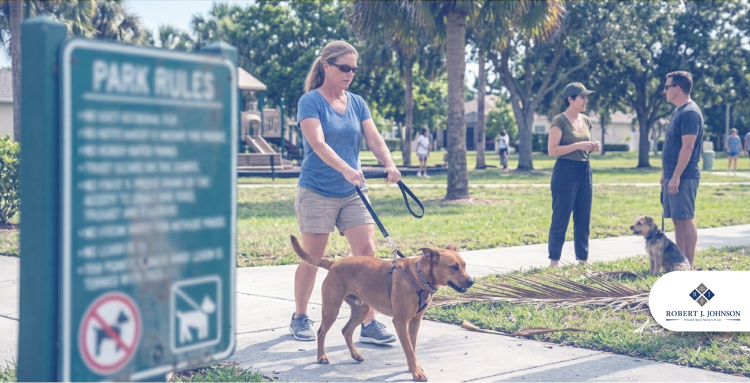
Florida does not have a single statewide leash law that applies to every city and county. Instead, the state gives local governments the power to create their own rules regarding animal control and restraint. In most Florida counties, owners are required to keep their dogs on a physical leash when they are not on their own property.
When an owner allows a dog to roam free and that dog bites a bystander, the violation of the local ordinance serves as strong evidence that the owner failed in their legal duty.
(I) The Impact of Municipal Codes
Many cities have strict codes that define exactly how an animal must be restrained in a public park or on a sidewalk. These codes often require a leash of a specific length and a person who is physically able to control the dog. If an owner is using a leash that is too long or they are not paying attention to their pet. They are creating a dangerous situation for everyone around them. I investigate the specific municipal codes in the area where your injury happened to see if the owner was breaking any local laws.
(II) Reporting Incidents to Animal Control
Reporting a bite to the local animal control agency is a vital step for your legal case. These agencies keep records of aggressive dogs and owners who repeatedly ignore leash requirements. An official report provides a neutral account of the incident and identifies the owner clearly for the legal record.
This documentation is often the foundation of a successful claim because it proves the attack was reported immediately to the proper authorities. If you are dealing with a different kind of pet incident, you might wonder do I have a case if I was bitten by a neighbor's cat as these cases follow different rules.
3) The Legal Effect of the Bad Dog Sign
A unique part of Florida law allows dog owners to avoid some liability if they display a specific warning sign on their property. If an owner has a sign that is easily readable and says "Bad Dog" or "Beware of Dog," they might not be strictly liable for a bite that happens on their land. This sign serves as a legal warning to anyone entering the property. However, this defense is not absolute and has several major exceptions that I often use to help my clients get the compensation they deserve.
(I) Exceptions for Young Children
The Bad Dog sign defense does not work if the victim is under the age of six. Florida law recognizes that young children cannot read or understand the danger associated with a warning sign. If a young child is bitten by a dog, the owner remains strictly liable for the injuries even if they have ten signs posted on their fence. This protection is essential because children are frequently the victims of severe dog attacks that result in lasting trauma.
(II) Requirements for Sign Visibility
For a warning sign to be legally valid, it must be placed in a prominent location where a visitor can see it before they encounter the dog. A sign that is hidden by overgrown bushes or placed in a dark corner of a porch may not be considered easily readable under the law. If the owner was negligent in some other way, such as leaving a gate open, the sign may not protect them from a lawsuit.
4) Florida Dog Bite Facts and Financial Data
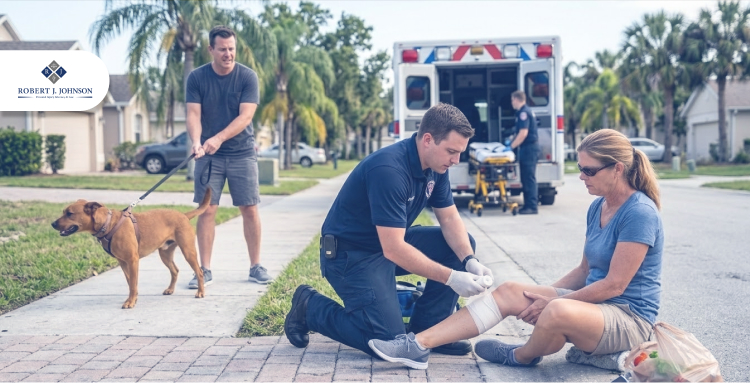
Recent statistics show that dog attacks are a major public health concern across the state of Florida. According to data from the Insurance Information Institute, Florida consistently ranks as the state with the second-highest number of dog bite insurance claims in the country. This high number of incidents reflects the density of pets in our communities and the frequent failures of owners to properly secure their animals.
The Cost of Recovery in Florida
The financial burden of a dog attack is significant for the victim and their family. The average cost per dog bite claim in Florida reached more than 65K dollars, which is significantly higher than the national average. These costs include emergency room visits, surgery, and long-term rehabilitation.
This data shows that insurance companies are paying out more money because the injuries are becoming more severe. You can learn more about how we calculate damages in a personal injury lawsuit to cover these rising costs.
Public Health and Injury Surveillance
The Florida Department of Health monitors dog bite injuries to help prevent future attacks and manage the risk of rabies. Their reports indicate that thousands of people seek medical attention for dog bites every year in Florida.
A large portion of these victims are children who require specialized care for injuries to the face and neck. These statistics highlight the need for strict enforcement of leash laws and owner responsibility to keep our neighborhoods safe. You can view these public health trends on the Florida Health Department website.
5) The Medical Consequences of Animal Attacks
From a medical perspective, a dog bite is a very dirty wound that carries a high risk of infection. A dog's mouth contains various bacteria and pathogens that are pushed deep into the tissue during a bite. This can lead to serious conditions like cellulitis or pasteurellosis if the wound is not cleaned and treated by a doctor immediately.
Addressing Nerve Damage and Scarring
A powerful dog can exert hundreds of pounds of pressure with its jaw, which can cause crush injuries to the underlying nerves and muscles. This damage can result in a loss of sensation or permanent weakness in the affected limb. Additionally, the tearing action of a bite often leaves jagged scars that may require multiple plastic surgeries to repair.
Managing the Psychological Trauma
The emotional impact of a dog attack is often just as debilitating as the physical wounds. Many victims suffer from post-traumatic stress disorder and a chronic fear of animals. This trauma can make it difficult to walk through your own neighborhood or visit friends who have pets. We seek compensation for the therapy and mental health support you need to move forward with your life.
6) Protecting Your Legal Claim After an Attack
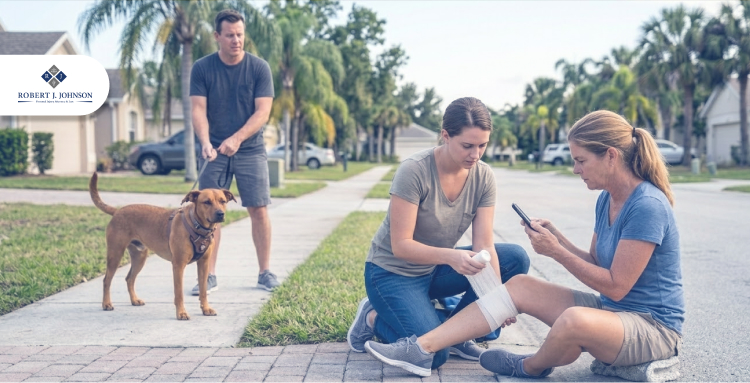
Taking the right steps after an attack is vital for ensuring you receive the maximum compensation allowed by law. Your priority must be your physical safety, but you also need to gather evidence that will support your version of the events. Insurance adjusters will look for any reason to deny your claim or reduce your settlement, so having a strong record of the incident is your best defense.
(I) Gathering On-Scene Evidence
If you are physically able, take photos of the dog and the area where the bite happened. Look for things like a broken leash, a hole in a fence, or a lack of warning signs. Get the contact information for the dog owner and any witnesses who saw what happened. If the owner tries to apologize and take blame, make a note of what they said, but do not feel pressured to sign any documents or accept a small cash payment on the spot.
(II) The Value of Professional Legal Guidance
Navigating a personal injury claim while recovering from an injury is incredibly stressful. I handle all the communications with the insurance companies and the legal filings so you do not have to. My team understands how to use Florida statutes and local ordinances to build a compelling case for your recovery. We work to ensure that every medical bill, lost wage, and emotional scar is accounted for in your final settlement.
Frequently Asked Questions
What happens if the dog owner does not have insurance?
If the owner does not have homeowners or renters insurance, we can explore other ways to recover compensation. This might include filing a lawsuit directly against the owner's assets.
Is it true that Florida has a one-bite rule?
No, Florida is a strict liability state. This means an owner is responsible for a bite even if the dog has never been aggressive before. You do not have to prove that the dog had a history of biting for the owner to be held liable for your damages.
Can I sue for a dog bite that happened at work?
Yes, if you were bitten while performing your job duties, you may have both a workers' compensation claim and a personal injury claim against the dog owner. This is common for delivery drivers, utility workers, and home health aides.
How long do I have to file my claim in Florida?
The statute of limitations for personal injury cases in Florida is generally two years from the date of the incident. It is important to start the process as soon as possible so we can collect fresh evidence
Disclaimer: This article is for general informational purposes and does not form an attorney-client relationship. For help with any personal injury case, reach out to Robert Johnson.